

Key takeaways
- Asynchronous learning can help you study around work, family and personal commitments.
- Structured online programs still include deadlines, clear expectations and flexible interactions with instructors and peers.
- Time-blocking and micro-learning can make your own schedule more realistic and easier to maintain.
- Student success advising can help working learners stay organized, confident and connected.
- The right online program should offer flexibility without leaving you to figure everything out on your own.
Many working professionals want to earn a degree, but are concerned about whether an online degree will actually fit into their lives.
It’s a fair concern. You may already be managing full-time work, family responsibilities, caregiving, errands and the need for rest. Adding coursework can feel overwhelming unless the program is designed with flexibility in mind.
That’s one reason why asynchronous learning, or predominantly asynchronous learning, has become so important. It can offer more control over when you study and engage with instructors and peers, while still providing structure, deadlines and connection.
What does asynchronous online learning mean in a structured university program?
Asynchronous online learning means you can access course materials without going to a physical classroom or attending live classes at a fixed time.
In a structured university program, this may include recorded materials, readings, assignments, online discussion activities and digital learning tools.
You often don’t need to log into a lecture in the middle of your workday. Instead, you may study before work, after dinner, on weekends or during other planned study blocks.
However, asynchronous doesn’t usually mean completely self-paced.
You still have deadlines, course schedules, assignment expectations and opportunities to engage with instructors and peers. That structure matters because it helps you keep moving, even when life gets busy.
This model gives you flexibility with direction, rather than flexibility without support.
How is asynchronous online learning different from synchronous learning?
Asynchronous learning happens on your schedule, while synchronous learning happens in real time.
Asynchronous online learning can work well if you need flexibility to learn at your own pace due to work, caregiving, travel, time zone differences or unpredictable responsibilities.
Synchronous learning may include live virtual classes, scheduled lectures or set meeting times. This format can work well if you want real-time discussion and a more traditional classroom rhythm.
While some online programs offer fully asynchronous or synchronous classes, many combine both models.
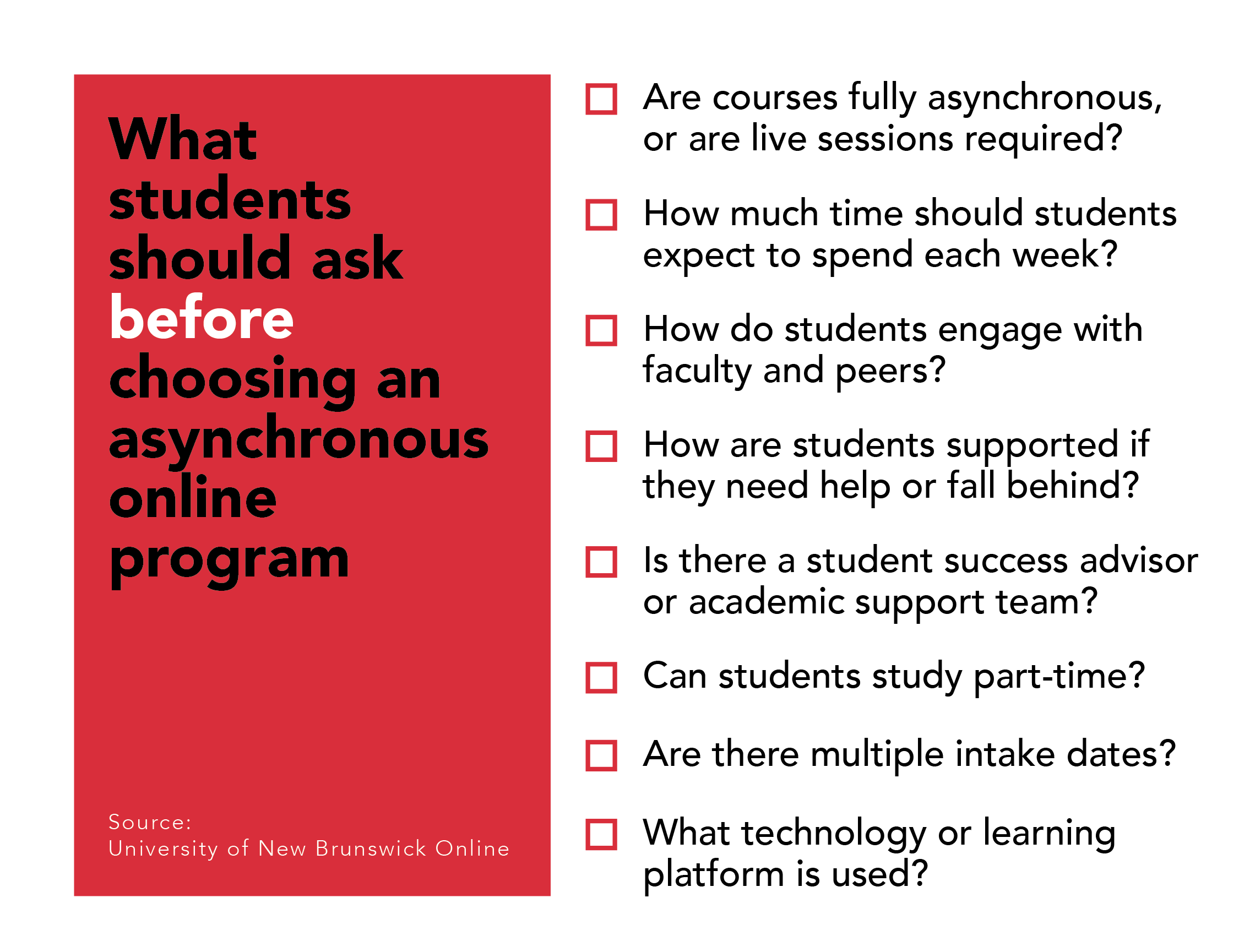
Before applying, review the delivery details carefully. Ask whether live sessions are required, how group work is handled and how much flexibility you’ll have week to week.
How do online courses fit into a full-time work schedule?
Online courses fit best when you treat them as a professional commitment, not something to squeeze in only when you have spare time.
Before classes begin, map your week honestly. Include work hours, commute time, family responsibilities, errands, exercise, downtime, study blocks, faculty and peer engagement expectations and assignment deadlines.
Then look for your best energy windows.
Maybe you focus well before work. Maybe Sunday afternoon is your strongest writing time. Maybe lunch breaks are better for reading than late-night cramming.
Asynchronous delivery can help you build study time around your life, but you still need to protect that time.
How can time-blocking support online learning?
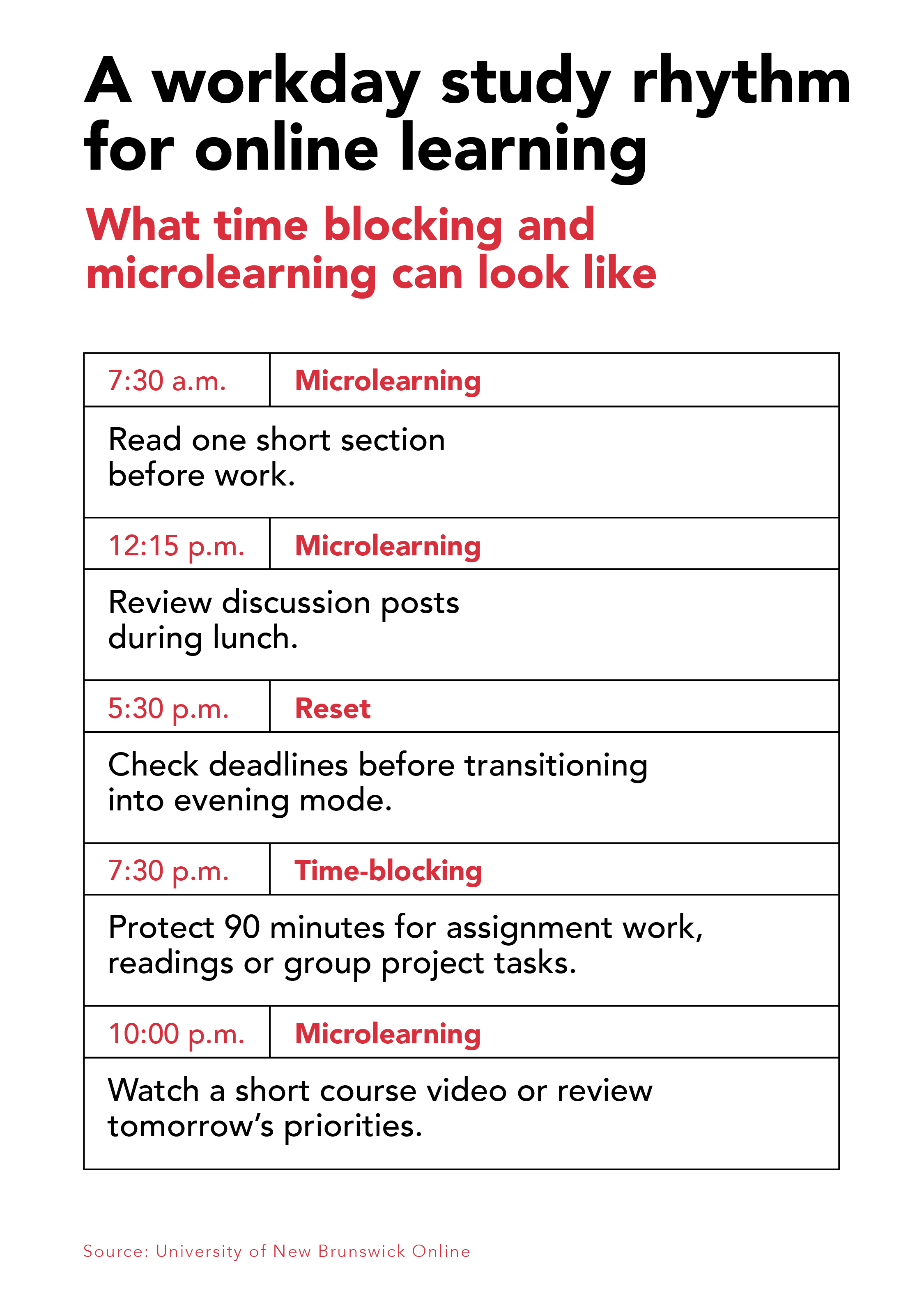
Time-blocking helps you turn vague study intentions into scheduled commitments.
Instead of writing “study this week,” block specific time in your calendar and treat those blocks like meetings.
Assign each block a clear task, such as reading one chapter, drafting a discussion post or reviewing feedback.
Examples of study blocks include:
- 45 minutes before work for readings
- One evening for discussion posts
- A longer weekend block for assignments
- Short lunch sessions for review
A Sunday or Monday planning session can help you see what’s coming and avoid last-minute pressure.
How can micro-learning make studying more manageable?
Micro-learning helps you make progress in short, focused sessions.
In an asynchronous format, you can often divide learning into smaller tasks.
You might watch part of a recorded lecture during lunch, review notes during a commute if you’re not driving, draft discussion points on your phone or read one section of an article between meetings.
Micro-learning shouldn’t replace deeper study. Instead, use it to support momentum.
Pair short sessions with longer weekly blocks for writing, research and assignment work.
What do online students need to succeed while working full time?
Online students need structure, communication, boundaries and support.
A weekly planning system can help you stay realistic.
At the start of each week, review course expectations, check when instructor and peer engagement is required, break assignments into smaller milestones and identify your most demanding tasks first.
Use a “next action” approach. Instead of writing “work on assignment,” write “find three sources,” “draft introduction” or “review rubric.”
Smaller next steps are easier to start, especially after a full workday.
Momentum matters. You don’t need a perfect schedule, but you do need a repeatable rhythm.
How does student success advising support help working learners stay on track?
Student success advising gives online learners a clear place to turn for guidance.
This support can be especially valuable if you’re returning to university after college, full-time work or time away from formal education. Working learners may need help with course planning, time management, academic expectations, pacing and finding resources before small challenges become major barriers.
This matters because professional learning is already common. Statistics Canada found that 30.9% of workers aged 25 to 64 participated in job-related training outside the formal education system.
For many adults, learning while working is part of career growth. Support can make that path feel less isolating.
How can online students avoid burnout during an online degree?
Online students can avoid burnout by planning proactively, protecting rest and choosing a pace that fits their season of life.
Burnout is a real concern when you’re balancing work, school and personal commitments. Canadian post-secondary student data has shown high levels of stress, with 45.6% of students reporting more-than-average stress and 15.3% reporting tremendous stress.
It's important to remember that the goal isn’t to fill every evening with coursework.
Instead, plan lighter study tasks after demanding workdays. Protect sleep. Schedule breaks. Use vacation days strategically when major deadlines are approaching. If part-time pathways are available, consider whether a slower pace would be more sustainable.
An online degree is a long-term commitment, not a short burst of productivity, and asking for help early is a strength, not a failure.
How can asynchronous online students build a network without being on campus?
Asynchronous online students can build a network by participating intentionally.
Connection can happen through flexible instructor engagement, discussion boards, group projects, peer feedback, virtual collaboration and cohort-based learning.
Post thoughtful discussion responses. Follow up with classmates after group work. Connect on LinkedIn. Share relevant professional experiences. Treat online collaboration as career networking, not just course participation.
Online learning can also expand your network in ways you might not have considered.
Your classmates may come from different cities, industries and career stages. That can expose you to perspectives you may not encounter in a local classroom.
How can students set boundaries with family, employers and themselves?
Students can protect their success by setting expectations before the program begins.
If your program requires 15 to 20 hours of weekly study time, that can be manageable, but only if it’s planned. Boundaries help you protect both your academic goals and your well-being.
What family or household boundaries can help?
Share your weekly study schedule with the people closest to you. Explain why the degree matters, identify protected quiet hours and ask for help during major deadlines.
Having these conversations early can reduce misunderstandings and make it easier for family members or roommates to support your goals.
Even small adjustments, such as coordinating schedules or sharing responsibilities, can create more consistent study time.
It can also help to set expectations around chores, childcare or social plans before the term becomes busy.
What workplace boundaries can help?
Be transparent where appropriate, but protect your job responsibilities.
Avoid letting schoolwork interfere with work by maintaining clear boundaries between your professional and study time.
Ask about tuition support, professional development funding or learning benefits that may be available through your employer, and consider using vacation days strategically around major projects, exams or other high-demand periods in your program.
What personal boundaries can help?
Limit distractions during study blocks by silencing notifications, closing unnecessary tabs and creating a dedicated workspace when possible.
Avoid overcommitting socially, especially during busy points in the term when major assignments or exams are approaching. Say no when needed and recognize that protecting your time is part of staying successful.
Just as importantly, build in rest, exercise and personal time so your schedule is sustainable, not just impressive on paper.
Take your next step with UNB’s Online BAM and Online MBA
UNB’s online courses are predominantly asynchronous, with flexible, structured peer and instructor interaction. You can study around work and life while still participating in a guided university learning experience.
UNB’s Online BAM is designed for college diploma graduates who want to build on their education with a university-level business degree.
UNB’s Online MBA is designed for professionals who want to strengthen their leadership, strategy and business decision-making skills.
Request information about UNB’s Online BAM or Online MBA today, or start your application when you’re ready.
Key terms
Asynchronous learning: A learning format where you can access course content and complete many activities without attending live classes at a fixed time.
Discussion board: An online space where students and instructors share ideas, ask questions and engage in course-related conversations.
Micro-learning: Short, focused study sessions that help you make progress in manageable pieces.
Student success advising: Personalized support that helps students navigate academic planning, time management, university resources and program requirements.
Synchronous learning: A learning format that happens in real time, such as live virtual lectures or scheduled online classes.
Time-blocking: A planning method where you schedule dedicated blocks of time for specific tasks.