

Key takeaways
- Canada doesn’t have one universal average percentage increase that applies to every MBA graduate.
- GMAC’s 2025 employer projections suggest an MBA starting-salary premium of about 14% over a bachelor’s degree in Canada.
- Your own pre-MBA compensation is the most useful baseline for measuring financial progress.
- An online MBA can reduce opportunity costs by allowing you to keep earning while studying.
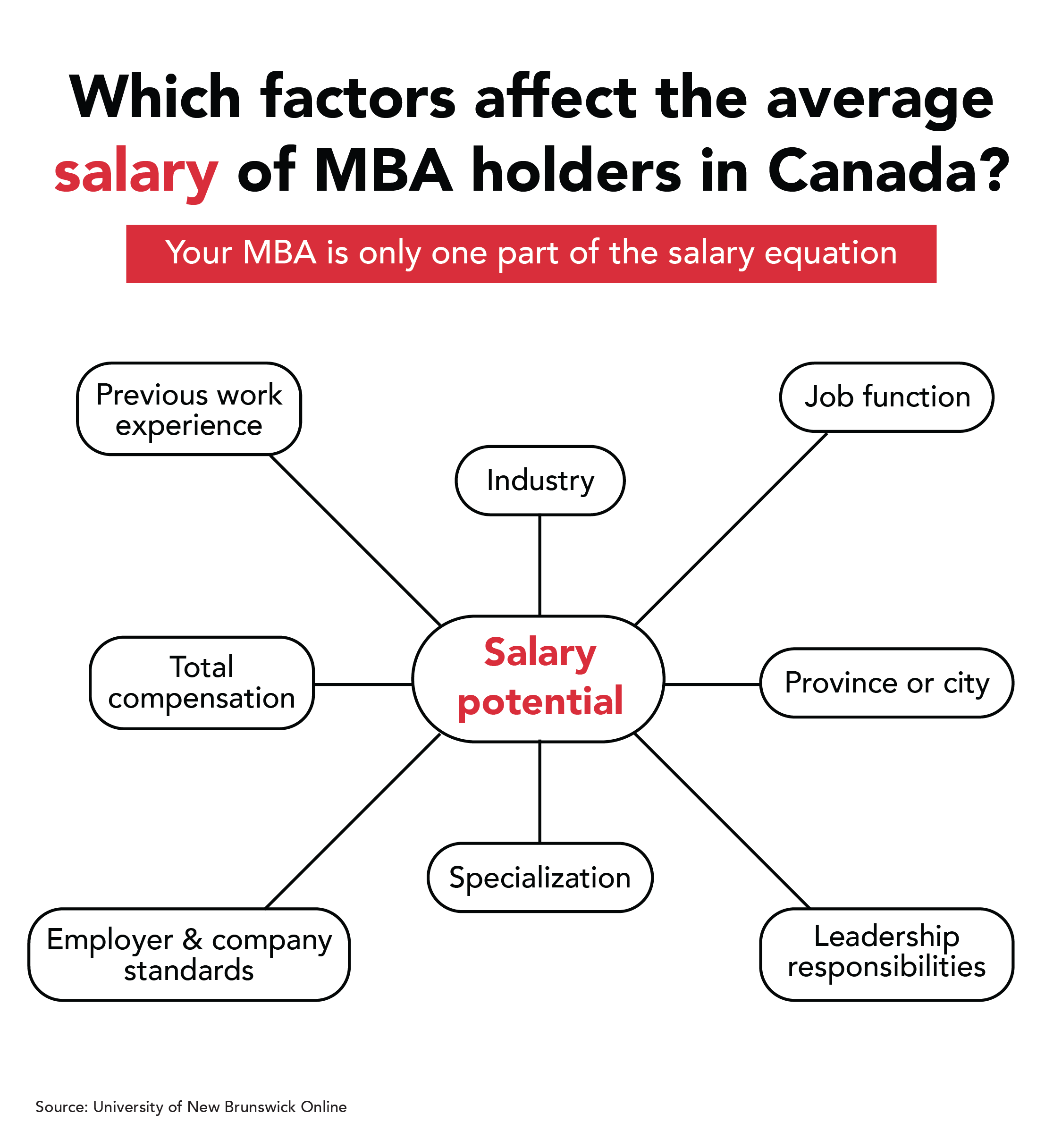
- Role, seniority, industry, province and experience can shape your return.
If you're considering an MBA, it's important to understand that your return will depend on your pre-MBA salary, target role, industry, location and experience.
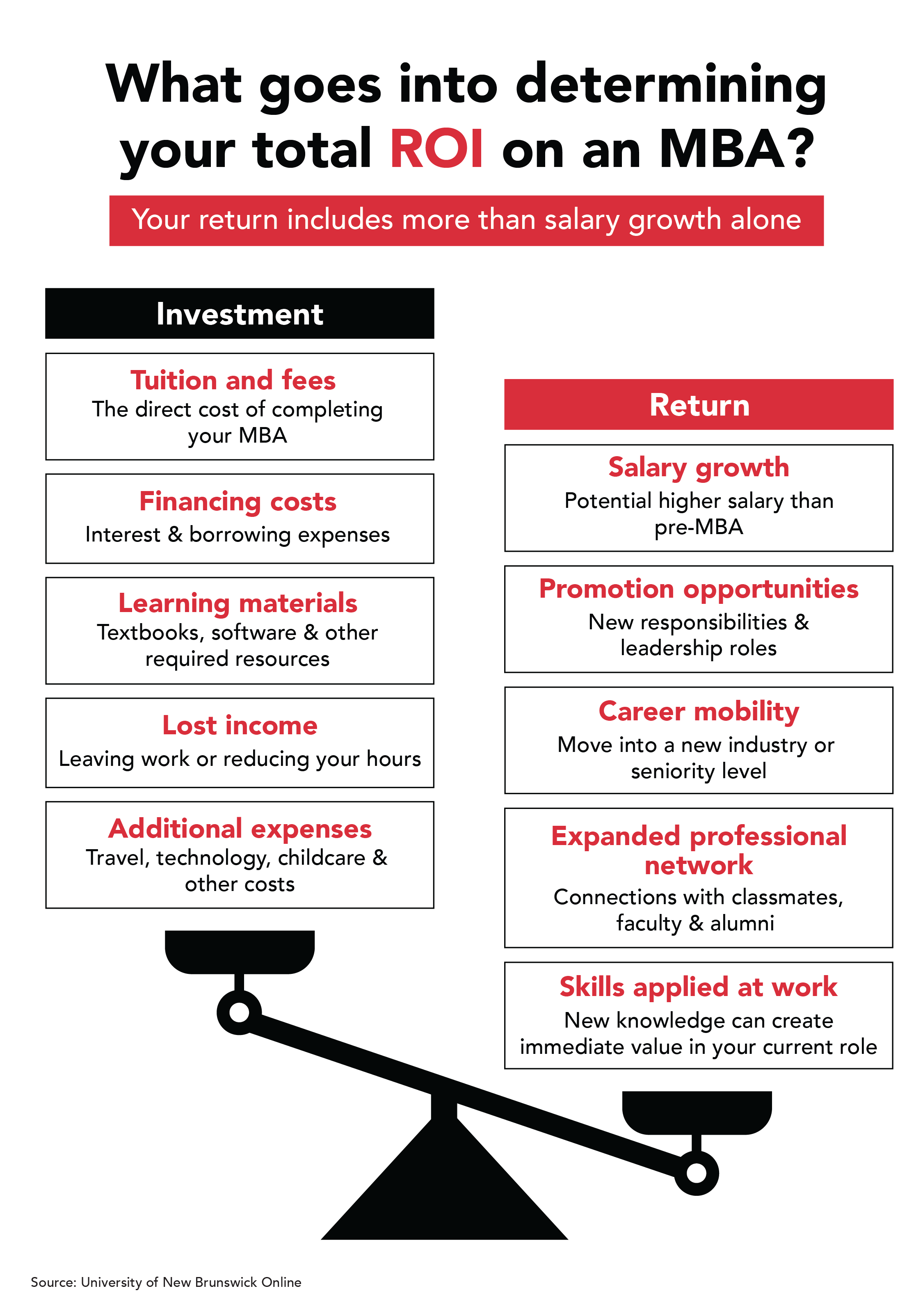
You should also know that your return on investment (ROI) for an MBA goes beyond the potential pay raise. It also includes promotion potential, career mobility, leadership opportunities and practical skills, all of which must be weighed against expected tuition, financing and any income you give up while studying.
Below, we'll explore what comprises the total ROI for MBA grads, including projected salary growth.
What does the average MBA salary in Canada reveal about earning potential?
Overall, MBA graduates in Canada can typically expect a 30–45% salary increase after earning their degree. The range can depend on the industry, your location, job transitions and the level of experience you're bringing.
For example, Ontario offers the highest average salary for MBA holders at $84,357.
The GMAC Corporate Recruiters Survey 2025 Report projected a median starting salary of $77,631 for MBA graduates across all experience levels hired by Canadian employers, compared with $67,927 for bachelor’s graduates. That’s about a 14% difference.
It's also worth noting that the ROI of an MBA tends to be higher if the candidate has professional experience before enrolling.
MBA graduates with limited workplace experience earn approximately $74,751, while those with 7+ years of experience earn approximately $101,327.
How should you compare your average salary before and after an MBA?
Your current compensation is a more useful starting point than the national average salary for all MBA graduates, especially when the comparison reflects your career goals.
Record your compensation before you enrol in business school, then compare it at graduation, one year later and again three to five years later. A simple tracking framework can include:
- Base salary
- Bonuses and commissions
- Benefits, pension contributions and equity
- Changes in job title, responsibilities and decision-making authority
- Working hours, commuting costs and location-related expenses
Also account for inflation and taxes. A higher nominal salary doesn’t always create a one-to-one increase in purchasing power or take-home income.
How do online business degrees create financial value?
An MBA creates financial value when its career benefits outweigh tuition and the other costs required to earn it.
Start with the direct price, including tuition fees, mandatory fees, learning materials and financing costs.
The average cost of a two-year MBA in Canada is around $46,948.
That figure spans a wide range of programs. Some well-regarded MBA options cost less than $30,000, while higher-priced executive MBA programs can push the national average considerably higher.
Next, add opportunity costs. For a full-time student who leaves the workforce, lost earnings may become one of the largest expenses in the MBA calculation. Living expenses should also be included in the total investment.
An online business degree may change that equation.
Continuing to work can help you preserve your income, avoid relocation and use new ideas immediately in your workplace.
However, cost shouldn’t be your only point of comparison.
Accreditation, curriculum relevance, career support and specialization options may influence the long-term return of different business degrees.
Which business administration and business management careers may offer the strongest ROI?
Approximately 85% of MBA graduates secure a new job within three months of graduation, but the strongest ROI often comes from moving into a higher-responsibility, higher-earning occupation, not from holding the MBA credential alone.
However, salary potential varies by occupation, seniority, province, industry, organization size and your previous experience.
Compare the wage data for your target occupation with your current role and identify the experience gaps you’ll still need to close.
For example, finance managers holding an MBA earn an average salary of $108,026, and management consultants can earn over $91,073.
What could an MBA mean for digital marketing and analytics careers?
An MBA may help digital marketing professionals move from campaign delivery into analytics, strategy, budgeting, marketing management and broader department leadership.
Canada’s Job Bank reports a national median salary of $115,003 for advertising, marketing and public relations managers.
Your ROI may be stronger when your studies combine commercial decision-making with strategic thinking and data-analysis skills, especially when that learning supports better media strategy and other business problems.
Marketing analytics, customer insights, artificial intelligence, e-commerce strategy, brand marketing and market research can connect MBA learning with the problems organizations are trying to solve.
How can an MBA support higher-level human resources roles?
An MBA can add financial, analytical and organizational strategy skills to an existing human resources background, improving career prospects for professionals aiming for senior HR leadership.
An MBA in human resources averages $78,000 annually, though actual compensation depends on role and experience.
For many professionals, the meaningful salary change comes from moving up the corporate ladder from a coordinator or specialist role into management.
Management analytics, organizational development, change management, corporate finance, compensation strategy, executive communication, business ethics and strategic decision-making can support that transition.
Which international business paths can strengthen MBA ROI?
International business paths can strengthen ROI when your MBA degree complements regional knowledge, industry expertise and strong professional relationships.
Potential directions include market development, global operations, consulting, supply chain management and cross-border strategy.
Job Bank notes that business development officers and market researchers may work for government departments, international organizations, marketing and analytics firms or business associations.
How does an executive MBA compare with an online MBA for salary ROI?
An executive MBA and an online MBA serve different career stages, so their salary outcomes shouldn’t be compared without adjusting for prior experience.
Executive MBA participants are often experienced managers or executives whose pre-program salaries are already high.
An online MBA may appeal to early and mid-career professionals who want advancement, specialization or a career change while continuing to work.
For either option, examine tuition, employer sponsorship, time away from work and access to leadership opportunities. The stronger format is the one that matches your experience, objective, available time and professional development needs.
What can employment reports tell you about MBA outcomes in Canada?
Employment reports provide useful context, but you need to understand what each number measures, including averages and median salaries.
GMAC reported that 30% of surveyed Canadian employers planned to expand MBA hiring in 2025. That indicates employer intent, not a guarantee of hiring or salary growth for an individual graduate.
When reviewing employment reports, check whether the figures describe starting salaries, experienced hires or total compensation, along with typical job functions and program focuses.
Look for the median in the job market, which is less affected by a small number of very high earners than the average.
What should international students consider when calculating MBA ROI in Canada?
International students should include tuition differences, work eligibility, immigration requirements and the time needed to build Canadian experience in their ROI calculations.
Salary results reported for domestic graduates shouldn’t automatically be treated as expected outcomes for international students.
Employment location, language skills, previous experience and alignment between the MBA and your target occupation can all influence outcomes.
Building local networks and industry familiarity may also extend the timeline required to reach your preferred role.
Lastly, keep in mind that immigration, study and work rules can change. Review current Government of Canada guidance and confirm that your institution and program align with your plans.
When can an online MBA deliver value beyond a salary increase?
An online MBA can create value before and beyond your next salary change.
You may gain:
- Eligibility for leadership opportunities requiring stronger financial knowledge and strategic insight
- A path into analytics, consulting, entrepreneurship or another business function
- Greater confidence managing budgets, teams, project management responsibilities, promotional strategies and organizational change
- More explicit networking opportunities through classmates, faculty, alumni and industry contributors
- Practical knowledge you can use in your current role before graduation
These outcomes are harder to express as a single percentage, but they can still improve your long-term career options and earning potential.
Build your return with UNB’s Online MBA.
UNB’s 100% Online MBA program lets you continue working while completing your business degree. You can build focused, career-relevant skills through concentrations in Management Analytics or Venture Commercialization, Scaling and Investment.
The program is delivered through an AACSB-accredited school of business. AACSB accreditation reflects recognized standards for curriculum quality, faculty qualifications and continuous improvement, giving you added confidence in the quality and credibility of your MBA.
Request program information to explore the curriculum, costs and next intake, or apply today.
Key terms
Return on investment: The financial and career value gained from an MBA compared with its direct and indirect costs.
Opportunity cost: Income or other benefits you give up while choosing to study.
Median salary: The midpoint of a salary range, with half of reported salaries above it and half below it.
Total compensation: Base salary plus bonuses, commissions, benefits, equity and other forms of pay.
Break-even period: The time required for financial gains linked to the MBA to equal its total cost.
Labour statistics: Official wage, employment and job-growth data published by government or recognized public agencies and used to benchmark salary trends.
Specialized skills: Niche, in-demand capabilities that can improve MBA ROI in specific sectors by supporting access to higher-paying roles.